
Beacon — FTDH & Fraud Operations System
Beacon is a case-driven fraud operations desk for digital banks. It brings fraud cases, FTDH handling, restoration and reporting together, with AI that drafts cited reports for people to approve.
How Beacon works
A view of how work moves through Beacon.
Work a disputed transfer case
In this fictional example, a customer reports a transfer they do not recognize. The fraud team needs a case record that connects evidence, decisions, and follow-up.
Open the case
Record the disputed transfer in the fraud desk and gather evidence from connected systems. Keep sensitive identifiers masked during routine review.
Review and approve
An analyst reviews the evidence and records the proposed action. A separate reviewer checks sensitive actions under four-eyes approval.
Track the outcome
Track the dispute and any restoration through closure. Review the case record and reporting drafts before they are released.
Product screens
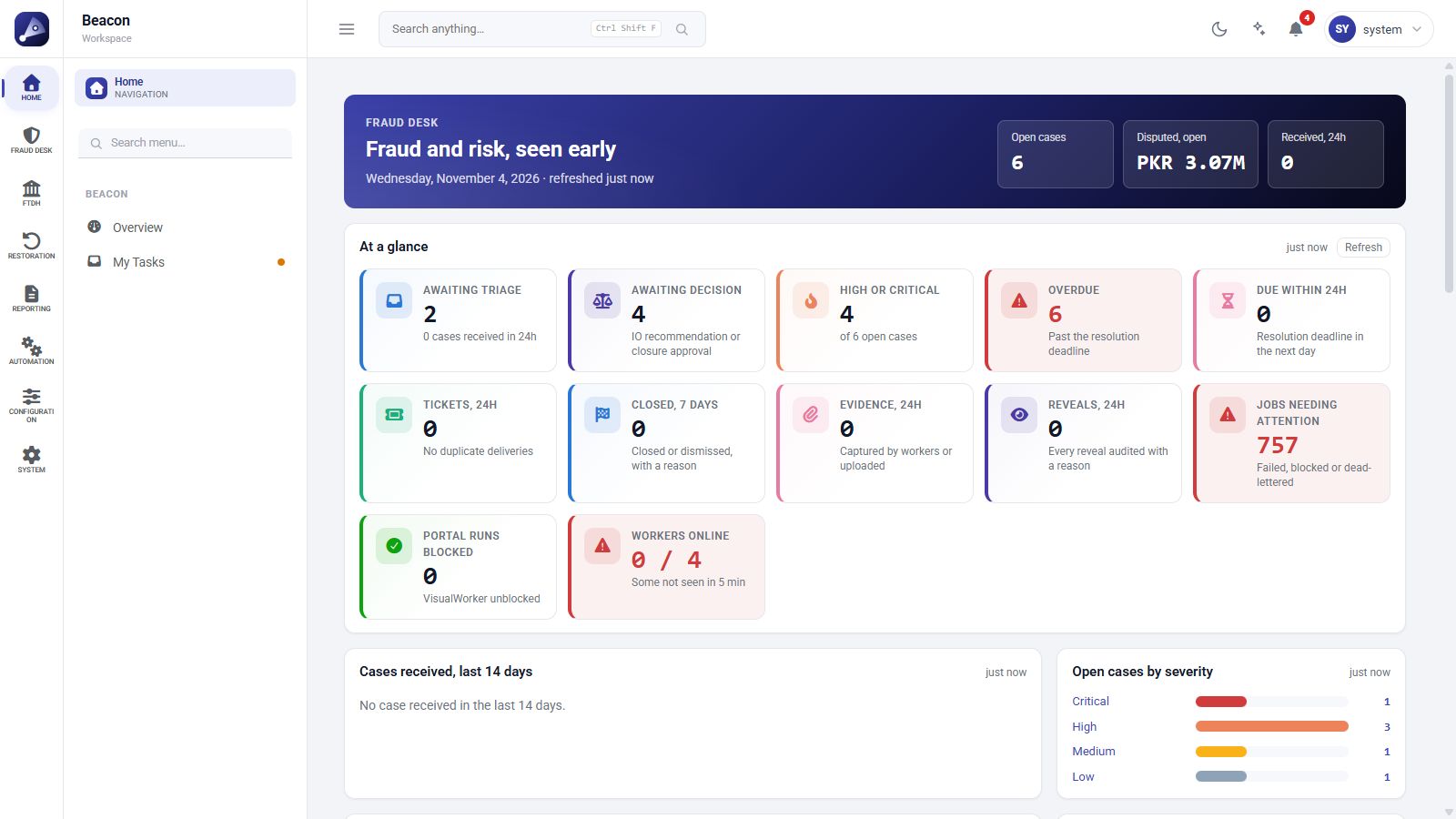
See cases awaiting triage or a decision alongside overdue work and upcoming deadlines.
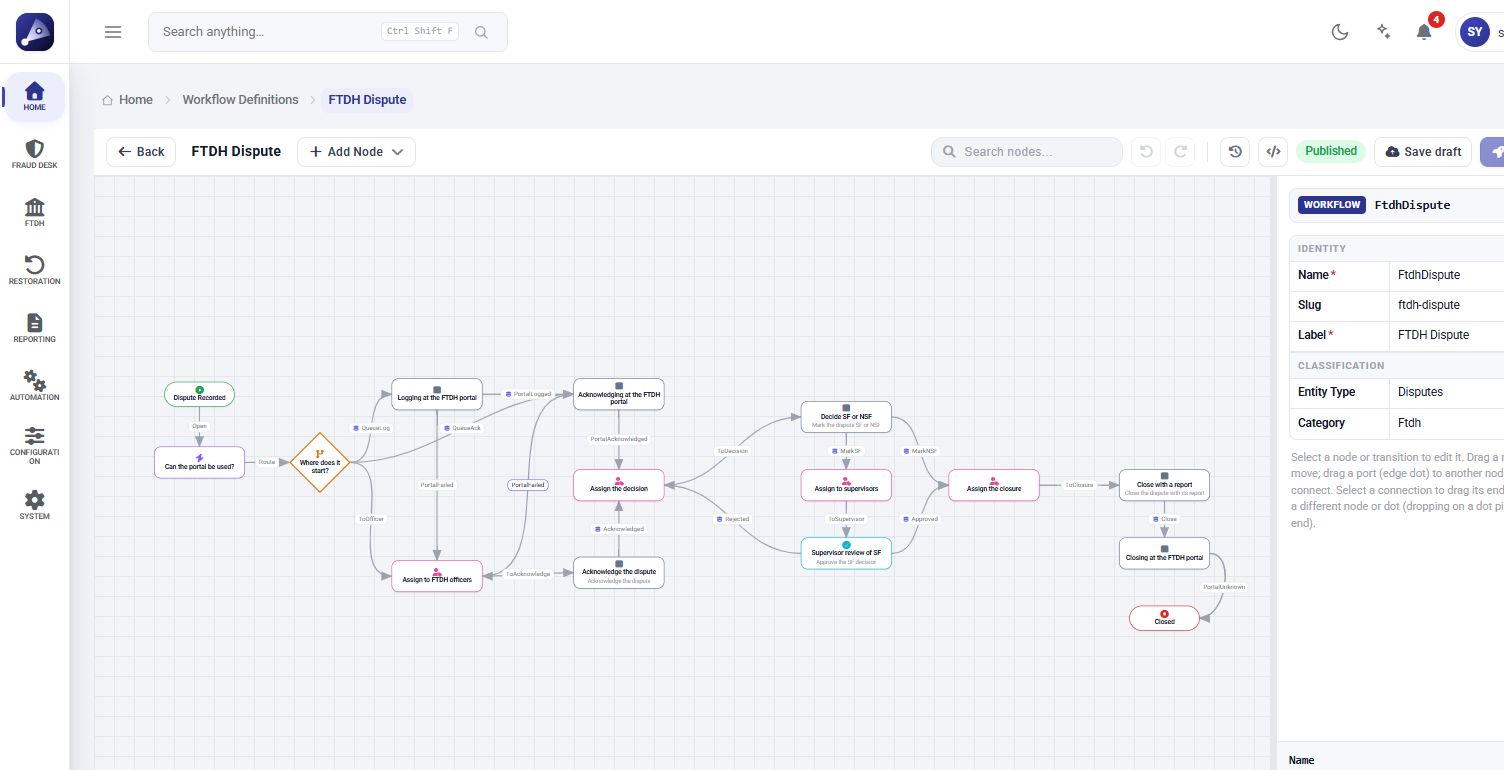
Follow a saved dispute workflow from portal acknowledgement through decision, supervisor review and closure.
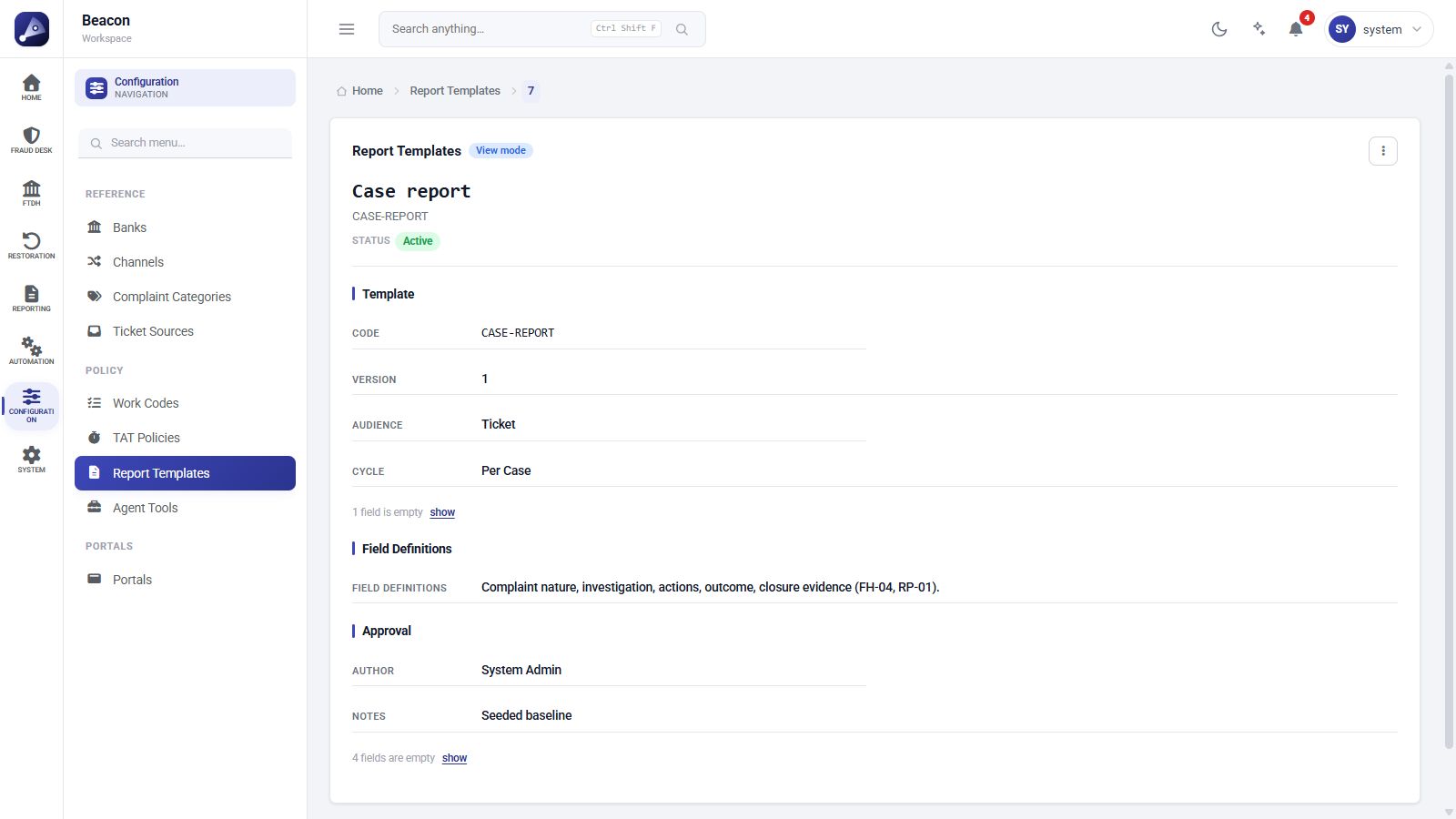
Configure a report’s audience, cycle and fields for investigation, actions and closure evidence.
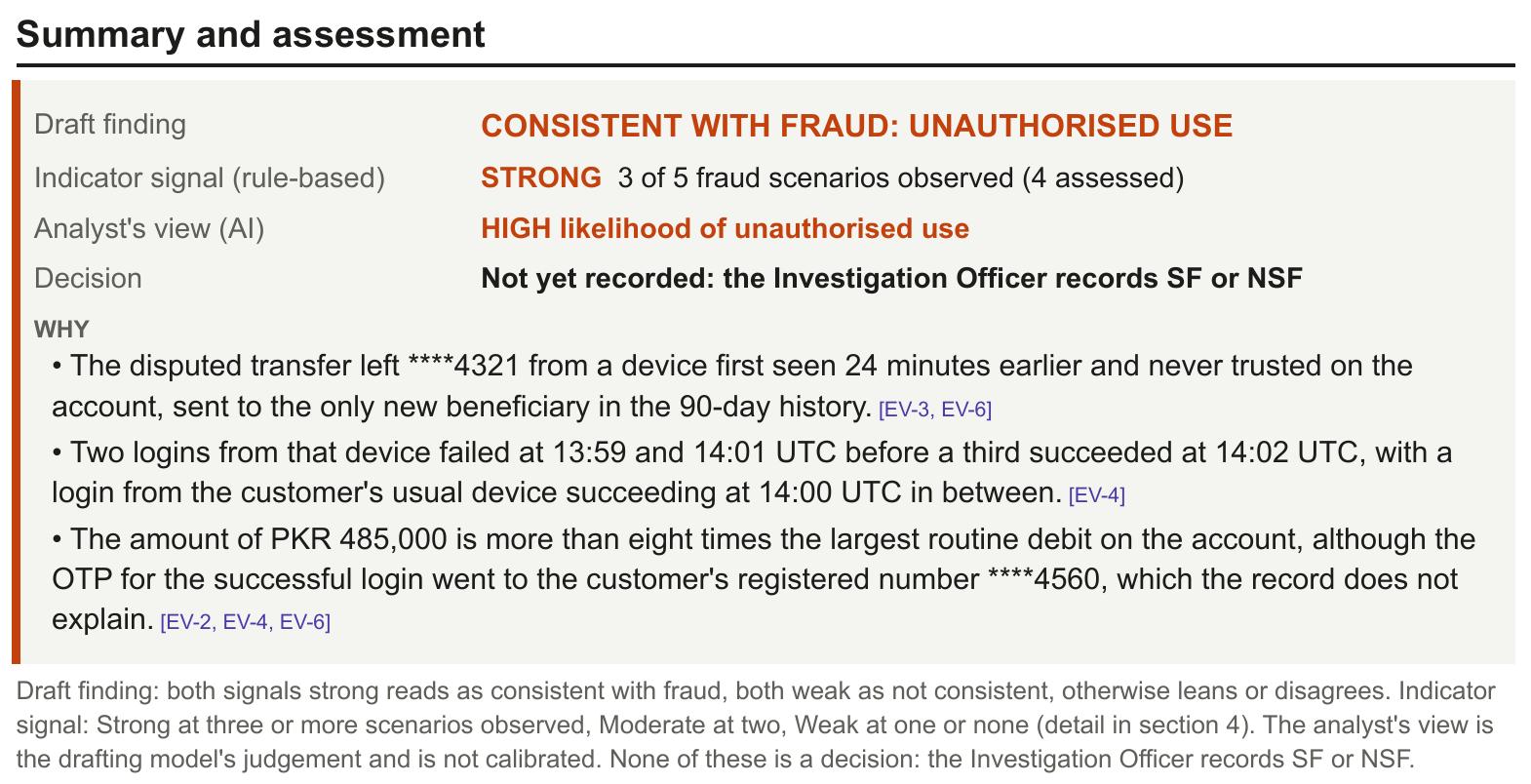
A demo report excerpt separates rule-based signals, the AI draft assessment and the decision reserved for the investigation officer.
The challenge
Teams looking at Beacon usually face too many portals, regulatory clocks and manual reports. Analysts move between systems for one case. Dispute and reporting timelines are tight. Case reports take time to write and check. Left alone, these problems slow people down and make results harder to prove.
Too many portals
Analysts move between systems for one case.
Regulatory clocks
Dispute and reporting timelines are tight.
Manual reports
Case reports take time to write and check.
What it does
Beacon covers Fraud Desk, FTDH, Restoration, Reporting, Automation and Policy control in one solution. Each capability below does a specific job, and together they follow the work from intake to report.
Fraud Desk
One workspace for case handling.
FTDH
Manage disputed transfers end to end.
Restoration
Track restoration to completion.
Reporting
Case, customer reply and regulatory drafts.
Automation
Software agents gather evidence from bank portals.
Policy control
Versioned policies and configuration.
How it works
Beacon follows 5 clear steps. A case enters the Fraud Desk. From there, work moves through each stage until the final step: AI drafts cited reports for human sign-off.
Open
A case enters the Fraud Desk.
Gather
Agents collect evidence from connected systems.
Decide
Analysts review the evidence under policy.
Approve
Four-eyes approval protects sensitive actions.
Report
AI drafts cited reports for human sign-off.
Outcomes
The result is a clearer way of working: one fraud desk, agent evidence gathering, cited AI drafts, encrypted, masked data and tracked case clocks. These are the changes teams should expect once Beacon is part of daily operations.
Who it's for
Beacon is designed for Fraud teams, Risk, Compliance and Digital banks. Each group gets something different from it, as the cards below show.
Fraud teams
A single case desk.
Risk
Controlled policies.
Compliance
Audit-ready records.
Digital banks
On-prem deployment.
AI integrated
Beacon integrates with the Exceleron AI Layer, on-prem or in the cloud, using RAG for grounded answers and MCP to connect tools and data.
Before and after
What changes for your team with Beacon.
Before
- Portal hopping
- Manual evidence capture
- Hand-written reports
- Clear-text identifiers
- Spreadsheet tracking
With Beacon
- One fraud desk
- Agent evidence gathering
- Cited AI drafts
- Encrypted, masked data
- Tracked case clocks
Technology explained
These are the technologies and formats Beacon works with, explained in plain language.
- Fraud Desk
- The workspace where analysts handle fraud cases.
- FTDH
- Handling of disputed funds transfers between banks.
- Restoration
- Tracking the return of funds to affected customers.
- Reporting
- Case, customer and regulatory report drafting.
- Automation
- Software agents that carry out repeat evidence gathering.
- Masking
- Hides sensitive identifiers unless a user has reason to see them.
- PDF reports
- Finished reports produced as PDF documents.
- Bank integrations
- Connections to ticketing, core banking and related systems, set up per bank.